The Buy-In Gap
Strategic success depends on buy-in; aligning stakeholders, incentives, and accountability. Without it, execution stalls. True impact comes when strategy drives shared ownership.
Marvel W.
25 April 2026

Most organizations invest significant time and effort in developing strategy. Yet many of those strategies never fully translate into results. The reason is rarely the strategy itself. It is the absence of buy-in.
At the executive level, buy-in is often misunderstood as agreement or approval. In reality, it is something far more critical:
Buy-in is the alignment of interests, influence, and accountability required to move strategy into execution.
Without this alignment, even the most well-designed initiatives encounter friction, often in subtle but highly consequential ways.
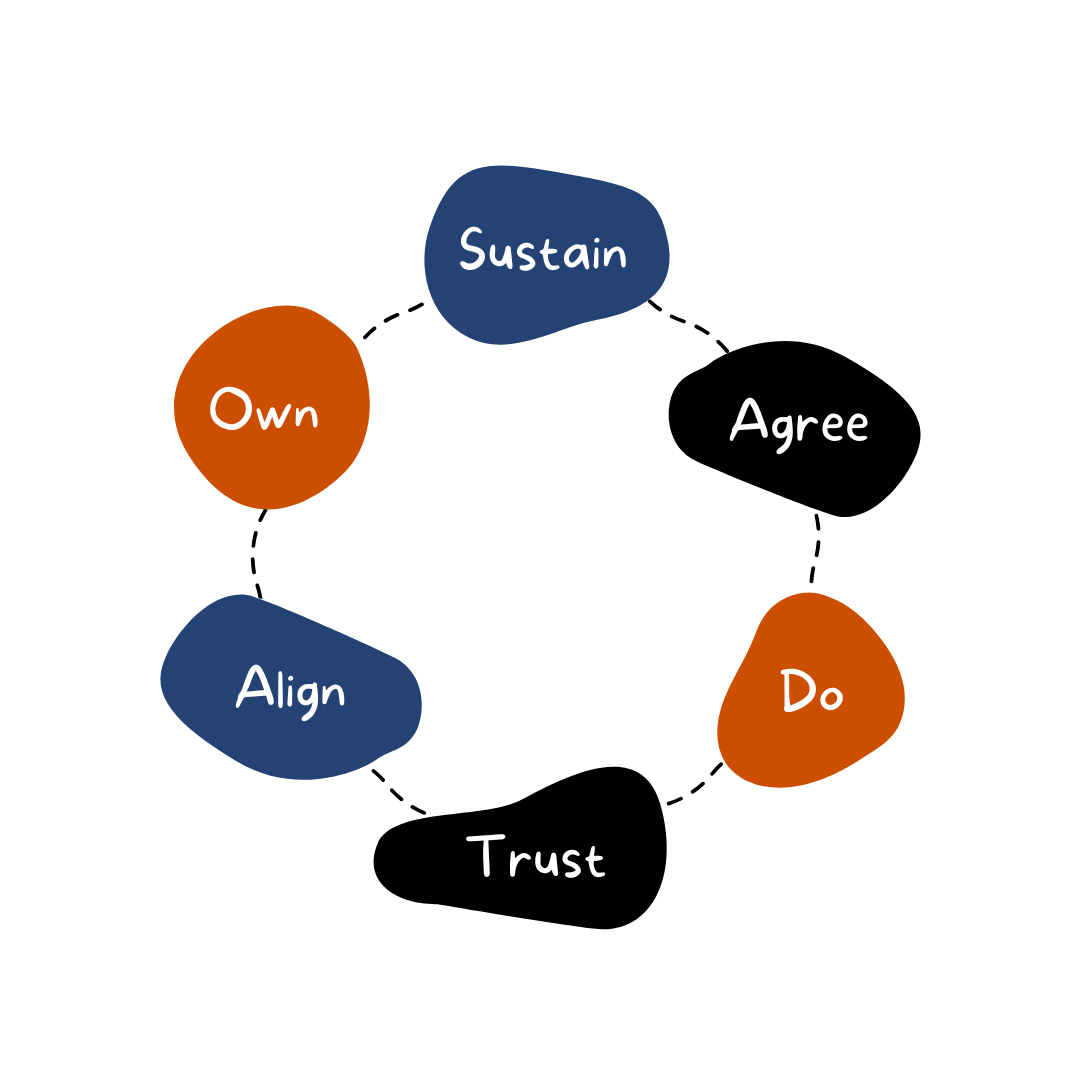
The Hidden Cost of Weak Buy-In
A lack of buy-in does not always manifest as direct resistance. More often, it appears in less visible but equally damaging forms:
- Strategic priorities that stall at governance level
- Delayed or fragmented execution across departments
- Competing agendas within leadership teams
- Passive compliance rather than active ownership
These are not operational inefficiencies. They are indicators of misalignment within the system. Over time, this misalignment erodes momentum, reduces impact, and increases the cost of execution.
Reframing Buy-In as a Strategic Function
One of the most common mistakes organizations make is treating buy-in as a communication exercise that happens after decisions are made.
This approach is fundamentally flawed. Buy-in should not be secured after strategy development; it should be designed into the strategy process itself.
This requires a shift in how leaders think about strategy:
- From presenting decisions → to shaping them collaboratively
- From informing stakeholders → to aligning incentives
- From managing resistance → to anticipating it
In this context, buy-in becomes a core component of strategic design, not a downstream activity.
Engineering Buy-In Across the Organization
Achieving meaningful buy-in requires deliberate effort across multiple levels of the organization. Each stakeholder group operates with distinct priorities:
- Boards focus on governance, risk, and long-term direction
- Executive teams focus on performance and strategic outcomes
- Operational teams focus on feasibility and execution
- External stakeholders focus on credibility and impact
Effective leaders recognize that alignment cannot be achieved through a single message. It must be intentionally structured and continuously reinforced.
This involves:
- Early engagement in the strategy process
- Clear alignment between strategic goals and stakeholder incentives
- Ongoing communication that builds understanding and trust
- Mechanisms that translate agreement into accountability
From Buy-In to Ownership
The ultimate objective is not simply buy-in; it is ownership.
There is a progression that organizations must navigate:
- Awareness
- Understanding
- Acceptance
- Support
- Ownership
It is only at the level of ownership that strategy becomes truly embedded within the organization.
At this point, execution is no longer dependent on oversight alone. It is driven by shared commitment and aligned action.
A Strategic Imperative for Leaders
In increasingly complex and multi-stakeholder environments, the ability to generate buy-in is not optional; it is a defining leadership capability.
Leaders who succeed are those who understand that:
Strategy does not fail because of poor ideas. It fails because of insufficient alignment behind those ideas.
The question, therefore, is not whether your strategy is sound.
It is whether your organization is aligned enough to deliver it.