Africa’s Livestock Sector Is Sitting on Billions in Untapped Potential. Here’s Why Most Farmers Never Benefit
Africa holds 35% of the world's livestock, yet captures less than 10% of global livestock GDP. The gap isn't geography. It's a systems failure. And systems failures can be fixed.
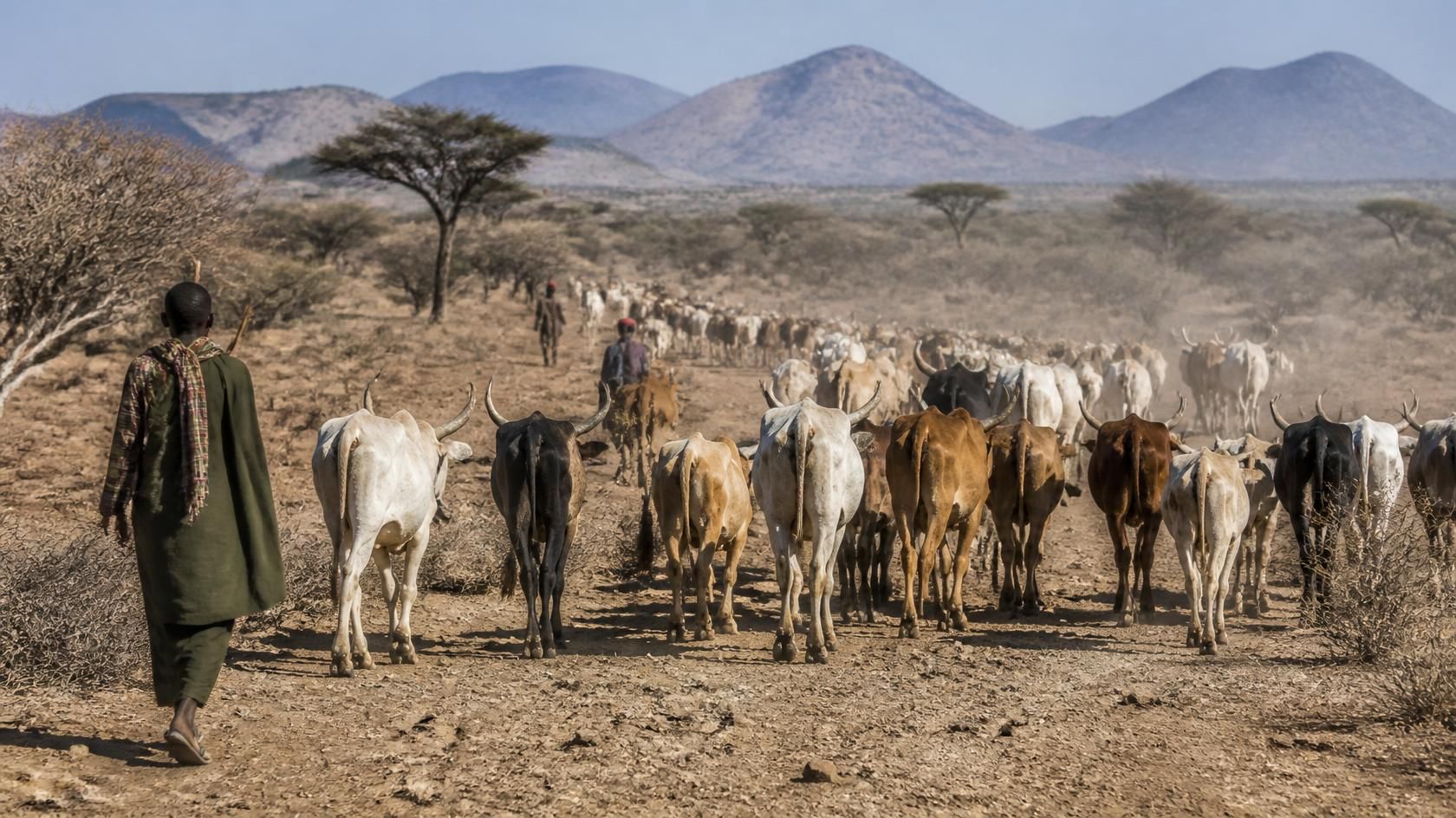
Let us begin with two numbers that should never exist this close together.
35%. Africa’s share of the world’s livestock population.
Less than 10%. Africa’s share of global livestock GDP.
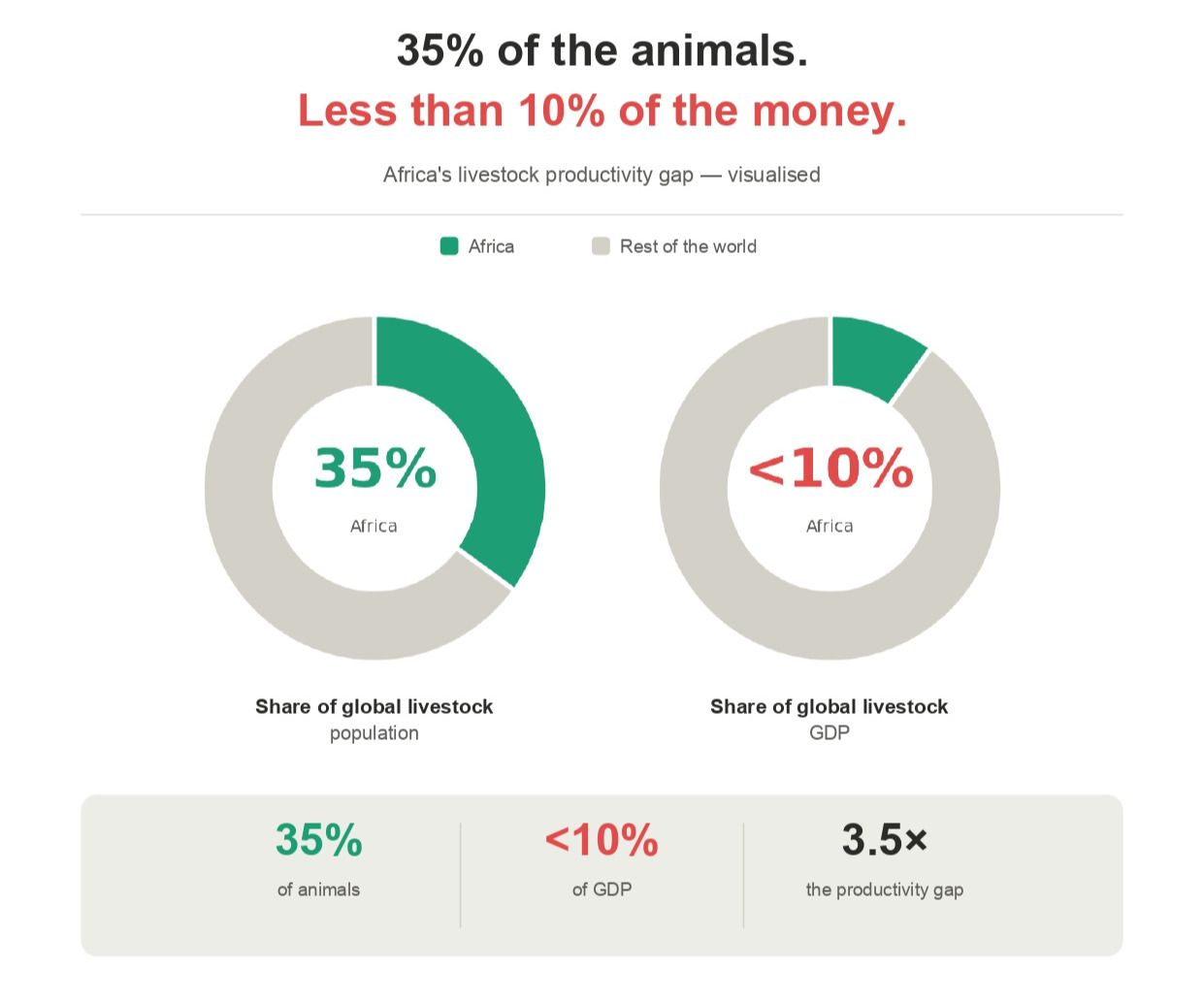
One in every three livestock animals on Earth grazes on African soil. Yet the continent captures less than one dollar in ten of the economic value those animals collectively generate.
This is not a problem of geography. It is not climate. It is not destiny.
It is a systems failure. And systems failures can be identified, understood, and corrected.
At Strategic Revenue Africa, we work with agricultural professionals, extension officers, agripreneurs, policymakers, veterinary practitioners, and development organisations to build the capacity required to close this gap. This article examines why Africa’s livestock productivity challenge persists, what the evidence says about solving it, and why human capital remains the single most important factor in transforming the sector.
Understanding Africa’s Livestock Production Systems
Before solutions can be effective, the landscape itself must be understood clearly. Livestock production in Africa is not a single uniform system. It operates across three structurally distinct models, each with its own realities, constraints, and productivity limits.
The Pastoral and Extensive System
Across the Sahel, the Horn of Africa, and the arid and semi-arid lands of East and Southern Africa, pastoralism is not an outdated way of life. It is a highly sophisticated adaptation strategy developed over centuries in environments where settled agriculture would struggle to survive.
Cattle, camels, sheep, and goats move according to rainfall and pasture availability. In this system, mobility is not inefficiency. Mobility is the management strategy itself.
But modern pressures are increasingly destabilising this model.
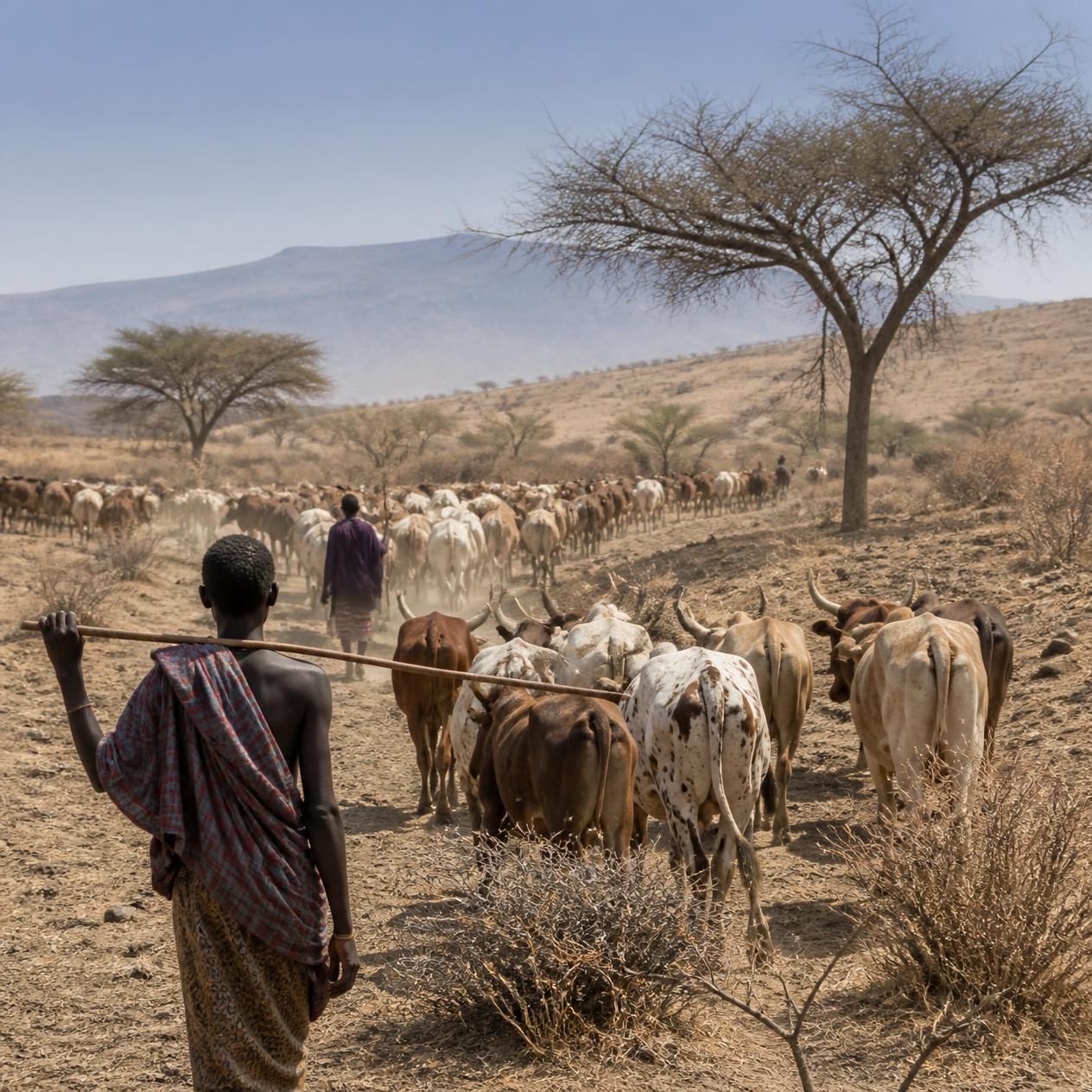
Climate change is altering rainfall patterns and shortening grazing cycles. Population growth and agricultural expansion are reducing available grazing corridors. Colonial era borders continue to divide ecosystems that pastoral communities historically managed as connected landscapes. At the same time, formal livestock markets often exclude pastoral producers from premium value chains because supply systems are designed around sedentary production models.
The pastoral system is not failing because pastoralists lack knowledge. It is under strain because structural changes are disrupting ecological and economic systems that evolved long before modern policy frameworks existed.
The Agropastoral and Mixed Crop Livestock System
This is where the majority of Africa’s livestock economy actually exists.
Across sub-Saharan Africa, smallholder households integrate livestock and crop farming into one interconnected system where animals provide traction, manure, income diversification, nutritional security, and emergency financial resilience.
A cow in a smallholder household is never just a cow. It is both a productive asset and a financial safety net.
This is also where the productivity gap becomes most visible and most correctable.
In many smallholder systems, dairy cattle produce only 2 to 4 litres of milk per day. Yet with improved nutrition, better reproductive management, strategic crossbreeding, and stronger animal health systems, the same farm can achieve 15 to 20 litres per day within a generation.
That difference is not simply about genetics. It is about knowledge, management systems, and access to practical technical support.
The difference between 4 litres and 20 litres is often the difference between subsistence and economic transformation for an entire household.
The Intensive and Commercial System
In peri-urban corridors around Nairobi, Lagos, Accra, Kampala, and Kigali, a different livestock economy is emerging.
Commercial poultry operations. Zero grazing dairy systems. Small-scale piggeries. Market-oriented agripreneurs are building businesses designed to supply rapidly growing urban populations.
Many of these entrepreneurs are young. Many are women. Many are operating with remarkable innovation and resilience despite limited institutional support.
Yet this sector continues to face major barriers. Input costs remain volatile. Veterinary support is inconsistent. Market access is opaque. Technical mentorship is limited. Many producers are forced to navigate complex production challenges without structured training or professional guidance.
The commercial opportunity is enormous. The human capital and institutional infrastructure needed to unlock it at scale are still insufficient.
The Six Root Causes of Low Livestock Productivity in Africa
Africa’s livestock productivity challenge cannot be reduced to one problem or one solution. It is the result of multiple structural failures interacting simultaneously.
1. The Genetics Challenge
Africa’s indigenous breeds such as Zebu, Ankole, Borana, and Red Maasai are extraordinary examples of adaptation. They are heat tolerant, disease resistant, and capable of surviving under harsh nutritional conditions.
But these breeds were selected primarily for survival, not maximum production.
Productivity and survival are not always the same breeding objective.
Kenya provides one of the clearest examples of what becomes possible when genetics are improved strategically. Crossbreeding Friesian dairy cattle with local Zebu breeds can increase milk output from 2 to 4 litres daily to 12 to 18 litres daily while retaining much of the hardiness required for local conditions.
Yet millions of farmers across Africa still lack access to reliable artificial insemination services, quality semen, or practical training on breed selection and herd improvement.
The science already exists. The delivery systems do not yet reach enough farmers.
2. The Nutrition Crisis
Nutrition remains one of the most underestimated drivers of low productivity.
Up to 60% of livestock productivity losses in many African systems are linked directly to poor nutrition. Animals grazing on low quality pasture or surviving on crop residues during dry seasons cannot perform at their biological potential regardless of breed quality.
Genetics may determine the ceiling of production. Nutrition determines whether animals ever come close to reaching it.
Many farmers have never received training in ration formulation, silage production, fodder conservation, or balanced feeding systems. Concepts such as Total Mixed Rations, forage budgeting, or body condition scoring remain inaccessible to many smallholder producers.
This is not because farmers lack willingness to learn. It is because practical extension support has not reached enough communities at scale.
3. The Hidden Disease Burden
Animal disease imposes a massive but often invisible economic burden on African farmers every year.
Foot and Mouth Disease suppresses milk production, reduces fertility, and triggers market restrictions. East Coast Fever kills calves that represent years of breeding investment. Brucellosis reduces reproductive efficiency while exposing families to zoonotic risk. Newcastle Disease can eliminate an entire poultry flock within days.
The economic consequences extend far beyond animal mortality.
The Food and Agriculture Organization estimates that livestock diseases account for annual production losses of 10 to 15% in many developing countries.
Most of these losses are preventable through vaccination, surveillance, biosecurity, and accessible veterinary services.
4. The Reproductive Management Gap
Reproduction is the engine of livestock productivity.
An animal that fails to conceive consistently, carries prolonged calving intervals, or loses calves regularly cannot sustain profitable production regardless of feed quality or genetics.
In many smallholder systems, reproductive management remains largely undocumented and unmanaged. Farmers often lack basic records for heat cycles, breeding dates, pregnancy confirmation, or calving intervals.
As a result, calving intervals frequently extend to 18 or even 24 months instead of the optimal 12 to 13 months.
The consequences are severe. Lower herd growth. Reduced milk production. Delayed income. Poor genetic progress.
The technologies required to solve this problem already exist. Artificial insemination, pregnancy diagnosis, estrus synchronisation, and structured calf management systems are all proven interventions. The challenge is making them accessible and affordable at scale.
5. Weak Animal Health Systems
Across much of Africa, animal health systems remain chronically under-resourced.
Veterinarian-to-livestock ratios are often far below recommended standards. Vaccine cold chain systems are unreliable in many rural areas. Diagnostic laboratories are concentrated in major cities, limiting rapid disease detection and response.
Community Animal Health Worker programmes have shown promise in several countries, but many still lack sustainable financing, supervision, and standardisation.
As a result, disease response remains reactive rather than preventive.
The issue is not scientific knowledge. The issue is service delivery capacity.
6. The Market Access Trap
Perhaps the most painful reality for many livestock farmers is this:
Even when production improves, income does not always improve proportionally.
A farmer invests in better feeding systems. Vaccinates animals consistently. Improves breeding practices. Milk production rises. Animal quality improves.
Then a middleman arrives at the farm gate and dictates the price.
Without cooperatives, cold chain infrastructure, transparent pricing systems, and collective bargaining power, farmers remain trapped in structurally unequal markets.
The value created on the farm is often captured downstream by traders, processors, and retailers while producers receive only a fraction of the final value.
This is not simply a market inefficiency. It is a structural imbalance in negotiating power.
What Livestock Productivity Enhancement Actually Requires
There is no single intervention capable of transforming livestock systems in isolation. Productivity improvement happens when multiple systems are strengthened together.
Genetic improvement requires functioning AI networks, trained technicians, reliable semen storage systems, and farmer education on breeding strategy.
Nutrition improvement requires high quality forage systems, silage production training, balanced ration formulation, and dry season feeding plans.
Animal health improvement requires vaccination campaigns, disease surveillance systems, biosecurity training, and accessible veterinary support.
Reproductive management requires record keeping, estrus detection training, pregnancy diagnosis services, and proper calf rearing protocols.
Market improvement requires strong cooperatives, milk collection infrastructure, chilling systems, formal buyer linkages, and transparent pricing mechanisms.
None of these interventions are experimental. They are already proven.
The real bottleneck is the availability of trained professionals capable of implementing these systems consistently at farm level.
What the Evidence Across Africa Shows
The evidence from across the continent is remarkably consistent.
In Ethiopia, the Livestock and Irrigation Value Chains for Ethiopian Smallholders programme combined improved genetics, nutrition support, animal health interventions, and market linkage strategies into one integrated model. Participating households recorded livestock income increases of approximately 44% within four years.
In Rwanda, the Girinka programme became internationally recognised not simply because cows were distributed to households, but because veterinary services, extension support, and cooperative structures were integrated into the programme design. The result was improved milk production, better household nutrition, and measurable gains in women’s economic participation.
Meanwhile, Kenya has built one of Africa’s strongest dairy sectors through decades of investment in dairy cooperatives, artificial insemination services, cold chain infrastructure, farmer training, and milk quality regulation. Today, Kenya produces more than 5 billion litres of milk annually, with smallholder farmers contributing the majority of supply.
None of these outcomes happened accidentally.
They were built through long term investment in systems, institutions, and people.
Frequently Asked Questions (FAQs)
Why is Africa’s livestock productivity so low despite having so many animals?
Africa’s productivity gap results from multiple interconnected challenges including low performing genetics, poor nutrition systems, preventable disease burdens, weak reproductive management, under resourced veterinary systems, and poor market access structures. These issues reinforce each other and require integrated solutions rather than isolated interventions.
How much can milk production realistically increase with improved management?
Under traditional systems, many indigenous dairy cattle produce 2 to 4 litres daily. With improved nutrition, crossbreeding, health management, and reproductive support, production can increase to 12 to 18 litres daily or more on the same farm.
Why is artificial insemination important for livestock productivity?
Artificial insemination gives farmers access to superior genetics without the cost of maintaining breeding bulls. It accelerates genetic improvement, improves milk yields, reduces disease transmission risks, and supports more structured reproductive management.
Which diseases create the greatest losses for African livestock farmers?
Major diseases include Foot and Mouth Disease, East Coast Fever, Brucellosis, Newcastle Disease, African Swine Fever, and Lumpy Skin Disease. Together, they account for major annual production losses across the continent.
How do cooperatives improve farmer income?
Cooperatives help farmers aggregate production, access formal buyers, negotiate stronger prices, reduce transaction costs, share infrastructure such as milk chilling facilities, and improve bargaining power within the value chain.
What makes livestock training effective?
Effective livestock training combines technical knowledge with practical implementation skills. It includes field exposure, farm level problem solving, systems thinking, and real world application across nutrition, health, breeding, reproduction, and market systems.
The Uncomfortable Question
If the solutions already exist, why does the productivity gap continue to widen?
Because knowledge does not transfer automatically.
Policies do not implement themselves. Research papers do not vaccinate animals. Conference presentations do not improve what happens on farms every morning across rural Africa.
The greatest constraint in African livestock development is not land. It is not water. It is not even technology.
It is the shortage of skilled, practically trained, context-aware professionals capable of implementing proven solutions consistently across the value chain.
That is fundamentally a human capital challenge.
And human capital requires investment in training.